Curse of Strahd
A valley where the danger never quite leaves the room. The quiet scenes are the worst of it, because a quiet scene is the vampire deciding what to do with you.
The world is mine and the character is yours. The story is the part we build together.
I run long-form campaigns for adults who want the hours they spend playing to feel worth it. Two sessions a month or four, three to four hours each, the same group every time, and a world that remembers what your character did.
Would rather talk first? Email me at storymasterdm@gmail.com and we will find fifteen minutes.
5.0 across 54 reviews on StartPlaying, where I ran 605 games before leaving in 2026.
Sessions run three to four hours. Groups stay together for months, and seats open when someone's life changes, so the list moves.
A valley where the danger never quite leaves the room. The quiet scenes are the worst of it, because a quiet scene is the vampire deciding what to do with you.
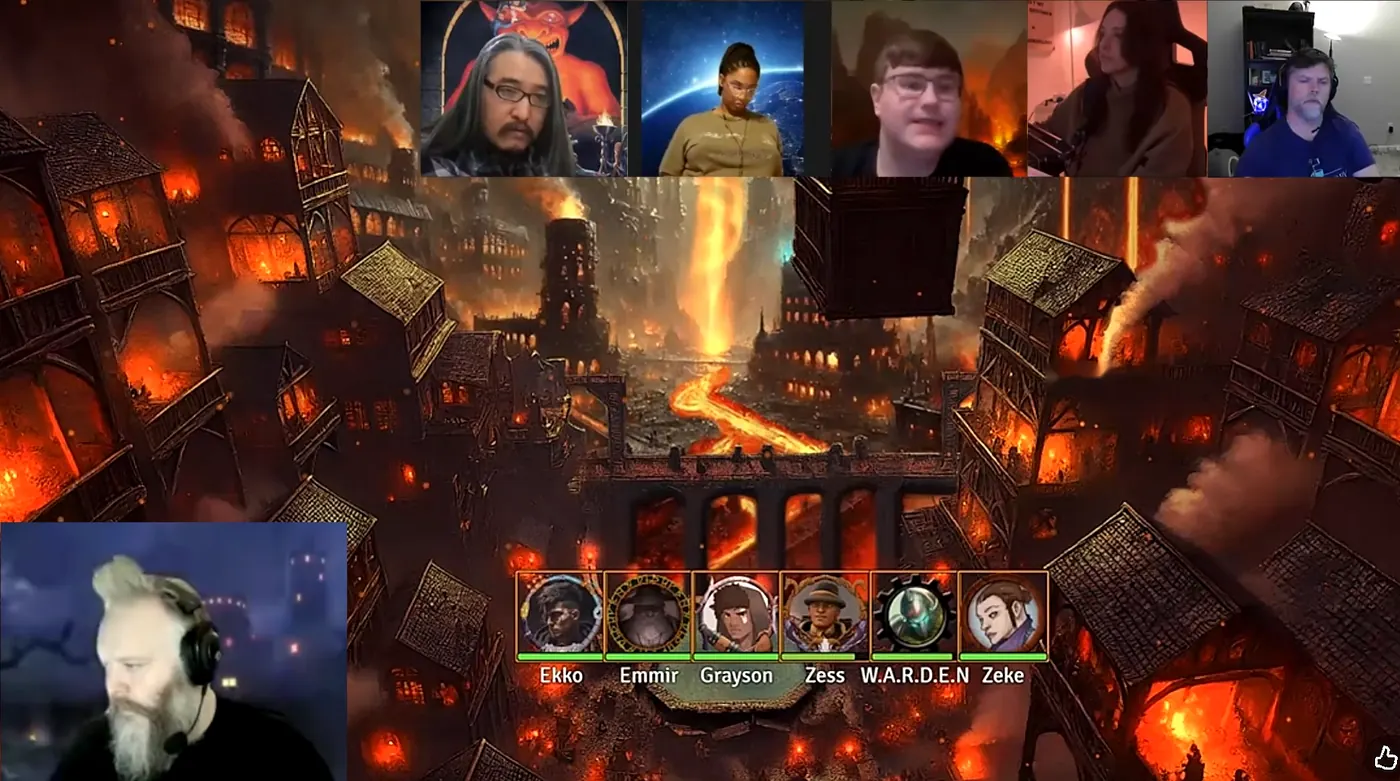
A living city that runs on lightning and industry, where politics and corruption decide what your party can get away with. Airships overhead, the heat of the Cogs underneath.
Ordinary people, a case that will not close, and a rules system where running away is often the correct play.
Private groups can commission a campaign of their own, and it does not have to be D&D. I have run Call of Cthulhu, Fiasco, Honey Heist, The Dresden Files, The Wheel of Time, Star Wars 5e, A Song of Ice and Fire, and Open Legend, which is my own favorite system. Ask in the Discord.
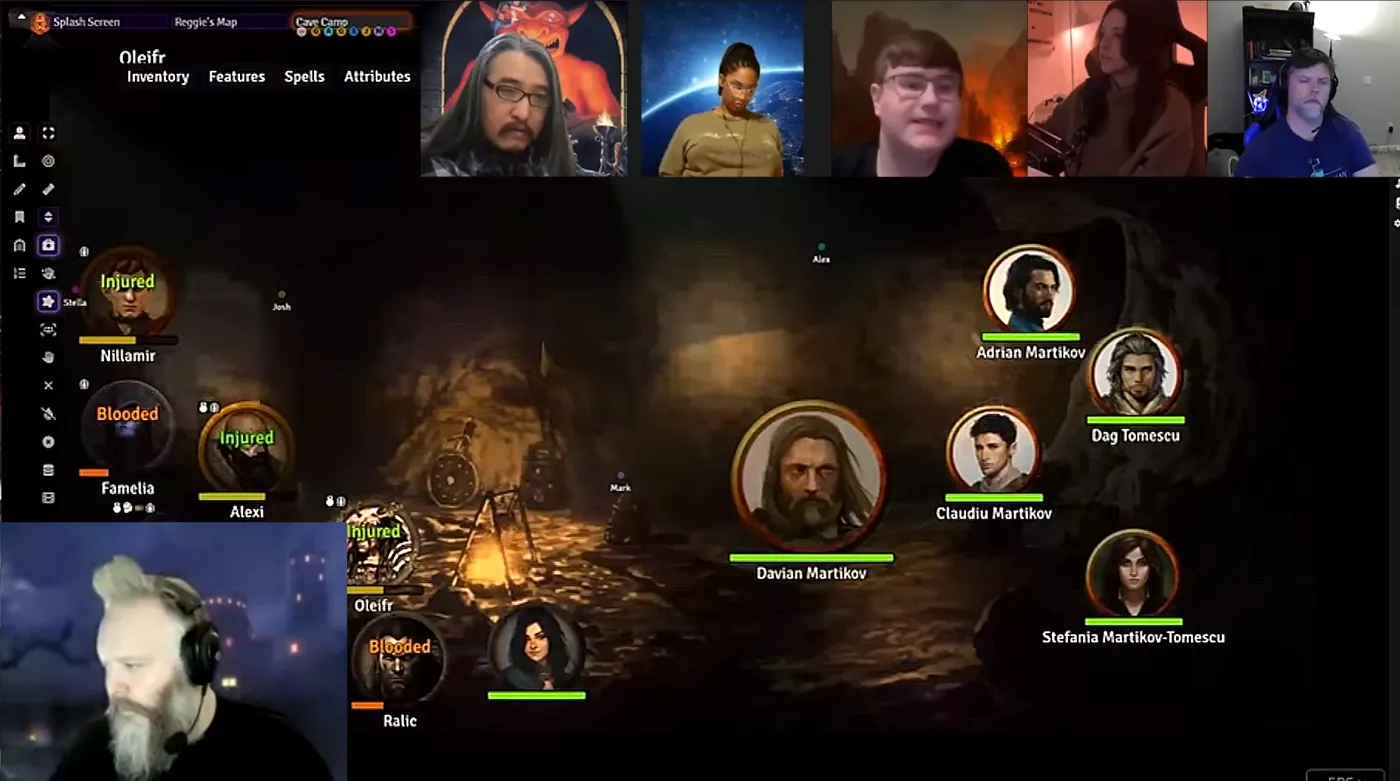
A Curse of Strahd party decides to step into the tavern on the village square. I wrote this out before the session, in case they went in. This is what they heard.
Splintered, hardwood floors creak under your feet as you step into a large open room. The crackle of a blazing fire in the hearth gives scant warmth to the few people inside. Thick moth-eaten black drapes sit on either side of the window. And the tables and chairs look past their best days, though they may have been quite nice when new.
Looking around you see, sitting at the back of the room, three women in brightly colored dresses and scarves and turbans, very similar to the clothing of the Vistani women you met at the start of your journey. A few others sit in various places around the room.
Standing at the bar you see a smallish, overweight man with thinning hair and a scraggly beard. He looks up as though startled when you enter then his face fills with terror and he screams! “AHH!! DEVILS!” and collapses behind the bar, whimpering…
Everyone in the winehouse looks up at this spectacle but most simply shake their head and return to their own business. One of three women sitting together near the back of the room stands and walks swiftly toward the bar. “Arik, no. Stop it! They are not devils you mist-touched idiot!”
At my tables, the people sitting in seats come before the game. And the game is what we're all there for. Here's how I handle the kinds of things that can come up at any table.
It detracts from the fun for everyone... we are here for a story full of adventure and carefully prepared surprises. Let yourself and everybody else have those surprises. This is not about winning the game. The game is the journey.
It has its place and it can be fun... in fact, leaning into those dump stats makes for amazing ROLEPLAY moments. I run character driven games, so I would rather you built around the person than around the sheet.
I listen to your side, make a ruling in the moment based on my understanding of the rules in context, and I am happy to pick the conversation back up between games if you want to go deeper. I have never had a rules argument split one of my tables, but I have heard the horror stories.
My table is a safe place to try out voices, accents and talking in character. Nobody is required to. As for mine, be prepared for MANY voiced characters. I lead by example.
Come in knowing we are all here for a collaborative experience, and that it is everybody's job to make sure everybody else is having a good time.
When a player suddenly starts speaking in character for the first time.
Billed monthly through Ko-fi. Every tier holds your seat at the same table, with the same group, for as long as you want it.
Four hours, start to finish, in D&D or any other system I run, from Honey Heist to Call of Cthulhu. Birthdays, bar and bat mitzvahs, holiday parties, bachelor parties, hen nights, or any other night worth turning into an event. No subscription, no campaign commitment.
Up to 4 players · $50 each after that, 6 maximum
Up to 4 players · $50 each after that, 6 maximum
Each credit is good for a free one-shot later, whenever you want to cash it in. Every tier comes with a yearly allowance, and the higher tiers come with more.
Every tier includes a commissioned piece of your character each year, drawn by hand. The higher the tier, the more of your character gets drawn.
The skills are learnable, and most of them are not about the rules.
A one-on-one hour works as a diagnostic. You send me what keeps going sideways at your table before we meet, and we spend the hour on that. Some of the topics I have coached GMs on:
Group classes follow a set curriculum with two to four GMs in the room. A lower rate per hour, and you get to hear how other people's tables break.
Realm Hero and Legendary Hero seats get the member rates automatically.
| Session | Regular | Realm Hero | Legendary Hero |
|---|---|---|---|
| One-on-one | |||
| 1 hour | $125 | $118 | $106 |
| 2 hours | $225 | $212 | $187 |
| Five 1 hour sessions | $500 | $468 | $406 |
| Five 2 hour sessions | $1,000 | $937 | $812 |
| Class seat (2 to 4 GMs) | |||
| 1 hour | $50 | $47 | $42 |
| 2 hours | $90 | $85 | $75 |
| Five 1 hour sessions | $200 | $187 | $162 |
| Five 2 hour sessions | $400 | $375 | $325 |
A game session shows you how your team actually behaves under uncertainty. You see who steps up when the plan falls apart and who waits to be asked.
Your group plays a short adventure built for people who have never touched a twenty-sided die. Afterward I run a debrief that ties specific moments from the game back to how your team talks to each other and makes decisions at work.
Online, or in person around metro Atlanta. I quote per group, because headcount and format change the work.
A story-driven program for young players. The game does the teaching: kids practice speaking up in a group and working a problem out with other people, because the story will not move until they do.
I am building the Academy so neurodivergent and neurotypical kids can sit at the same table and both get something out of it.
Enrollment has not opened yet. Join the interest list and you will hear about it before anyone else.
$30 a session, billed monthly at $130, for anybody with a valid student ID. Weekly, weekday daytime, six players, same production as every other table I run.
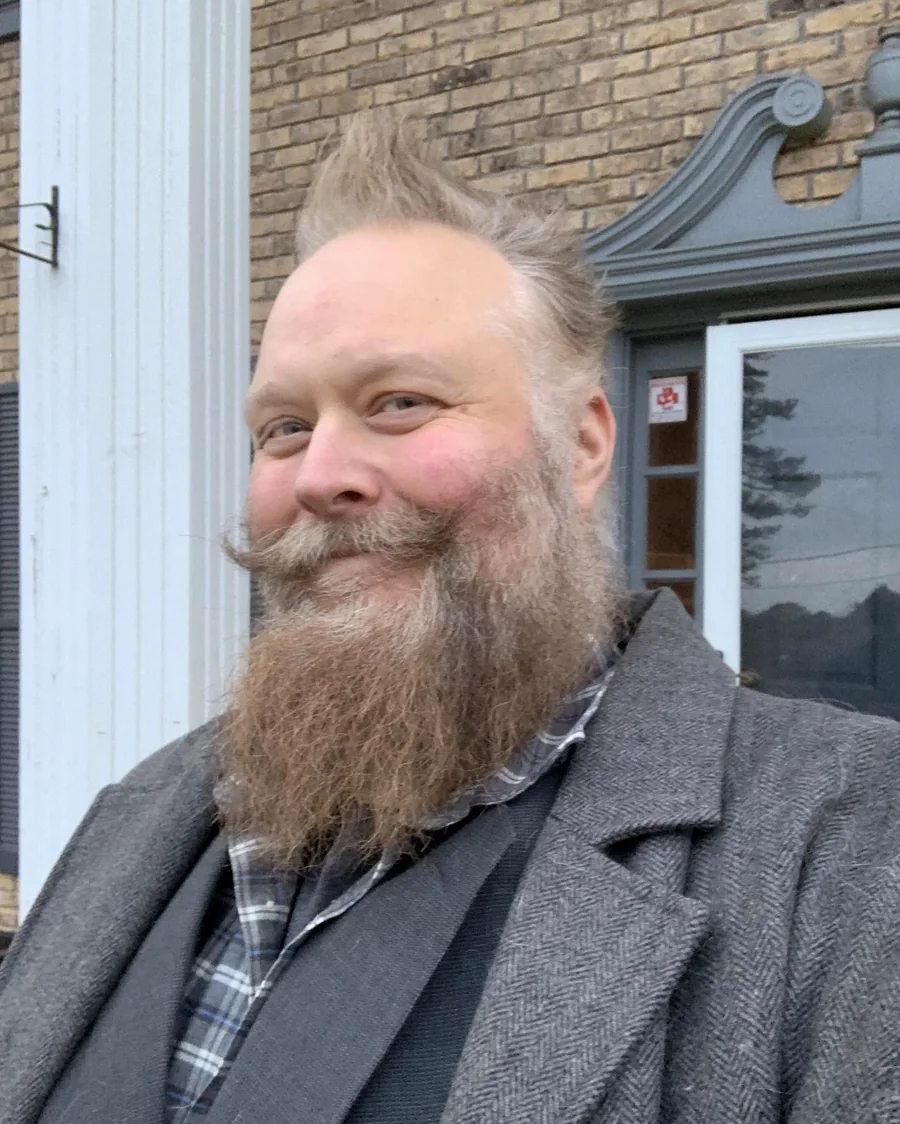
Three friends on a bedroom floor in 1988, papers and crayons and six-sided dice everywhere. One of them, me, frantically drawing dungeon corridors, two big-nosed trollish things and a lizard with a lion's head, scratching through them every time somebody landed an attack. We pushed Parcheesi tokens around the page. I had seen the red box at a friend's house. I had not actually played the game yet.
I am in my forties now and I still like this imagination game better than any other hobby. A dozen systems have come and gone in that time, from AD&D 2e and GURPS to Fiasco, Open Legend and the odd round of Honey Heist. I went professional in 2018, and more than 300 players have sat at my tables since.
My wheelhouse is character and story. I put together a good fight as well, but the fight is there to serve the story rather than the other way around.
Three rules at my table. Put others before yourself, which means six people are watching out for your good time instead of just you. Ask the stupid question and get a real answer. Play your character instead of the optimal move, and I will reward you for it every time.
Published with each player's permission.
What has meant the most to me is sharing the Eberron game with my son. I brought him into the campaign, and Joel's storytelling has given us something to experience and talk about together. It has helped us bond. I also get to watch my son express himself through his character without feeling judged. Seeing him feel comfortable making choices, taking chances, and being himself at the table is something I'm deeply grateful for.
If ever you weren't sure about paying for professional GM services, Joel has proven (at least to this former critic) that there are storytelling experiences worth paying for.
I once turned down an in-character action because it wasn't something my character would do, and he rewarded that instead of just rewarding combat wins. Some of our best sessions have had almost no combat at all.
As a Gamemaster myself I hold a high standard for the games I play in and Joel's games have yet to disappoint in more than a year of playing.
Nothing feels like a stomp and it doesn't feel like we're fighting for our lives every time we roll for initiative. The story feels like a shared story, and it doesn't feel like he's reading just from a module.
As a beginner of D&D, I really recommend Joel's campaigns to give you a full D&D experience while also giving you room and tips to learn.
The man can take a chuckling and wise-cracking table straight back into a dramatic scene with such effortless narrative maneuvering that you wouldn't even feel the whiplash of what just happened. Joel not only sets the bar, he'll hand you the 10 foot pole you need to help you clear it.
He is the first and only DM I've ever had post our sessions to a private YouTube channel. It made me feel very professional, like I had to work a little harder on the RP.
I've seen players come and go, beloved characters die, and villains win in ways the party never thought possible... 11/10, would bring a backup character again.
He is great at creating challenging and intriguing combat as well as doing awesome storytelling descriptions. In addition, he helps foster a supportive environment in his groups. I would highly recommend this GM.
He was very inclusive for the newer players, and helped move the game along a good pace. The custom story was unique and engaging.
Joel is the first great DM I've had the pleasure to be at the table with. He really matches the tone and momentum of the group very well, and has his own fun ways to bring complexity and thought to the game.
One-shot prices are up in the pricing section.
Players wrote these in their own words. Nothing is edited except obvious typos, and everyone below gave permission to publish their name.
Join the Discord and tell me what kind of game you are after. Open seats get posted there, and I will match you to a table whose schedule works with yours.
A computer with a current browser, a headset or microphone, and a Discord account. Foundry runs in the browser, voice runs on Zoom, and the table shares a D&D Beyond library... so there is nothing for you to buy.
Campaign sessions run three to four hours. One-shots and private events run four hours, start to finish.
Let me know at least 24 hours ahead if you can. Your seat is yours either way, and your banked game credits cover a free one-shot later. If you are absent, I run your character in a support role during combat, basic attacks and tactics, so the party is not down a body and nothing happens to your character that you would not have chosen.
Life happens, and everybody gets a grace absence for the times it happens without warning. The one thing I ask is that you tell me, because I build each session around the whole party and last minute rewrites are the part of this job that shows.
Think of it as a banked game. Every tier comes with an allowance each year, from four at Folk Hero up to twenty-four on the weekly Legendary tier, and whenever you want to cash one in it pays for a free one-shot. You decide when to spend them.
Every campaign opens with a session zero where the group sets lines and veils. They hold for the whole campaign, and anybody can raise a new one at any point, during a session or in DMs afterward. No explanation needed.
If something lands wrong mid-session, raise your hand and I stop the game. From there we usually do one of three things: fade to black and I summarize where that leaves the story, rewind a short way and take it a different direction, or take five and come back to it.